
Petite shoes
Every style exists in size 33. Petite women's shoes in leather, handcrafted in Italy and Spain.


Rossia Gold Sandals
210 €


Rossia Black Sandals
205 €


Mellia Brown Gloss Mules
195 €


Titi Black Mules
210 €


Ritao Mesh Beige Loafers
170 €


Ritao Mesh Black Loafers
170 €


Nabbi Almond Ballerinas
195 €


Nabbi Black Ballerinas
195 €
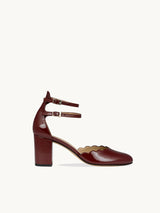
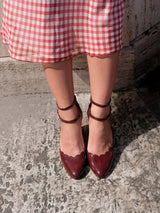
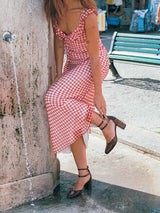



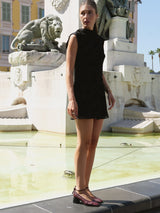
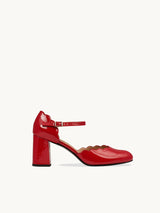


Florita Red Mary Janes
220 €

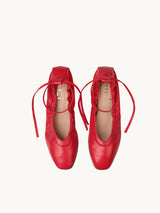
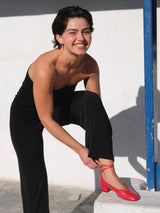
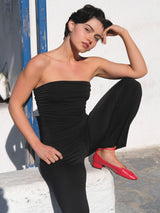
Red Ballerinas Benni
195 €
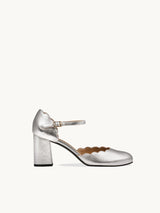
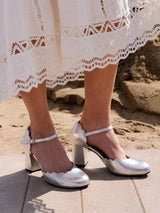
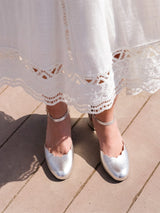

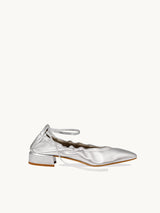
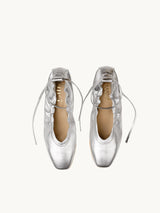

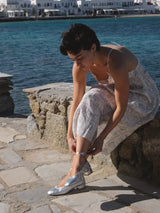
Benni Silver Ballerinas
195 €
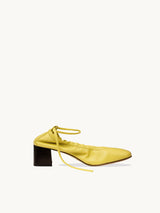
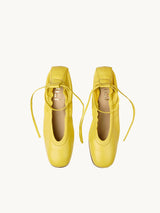

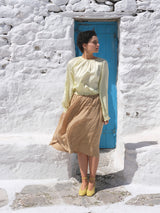
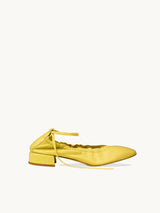
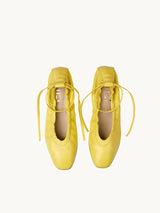
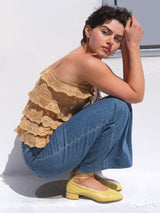
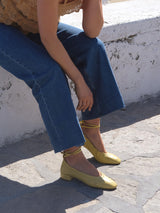
Yellow Ballerinas Benni
195 €
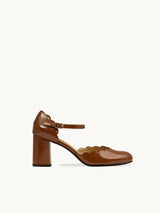


Florita Tan Mary Janes
220 €
A truly beautiful collection.
A big thank you for thinking of small sizes.
Reliable, meticulous, and thoughtful with packaging, I’m always excited for each order.
See you soon, and thanks again!
Sylvie S.
Order received today. Thank you for the little touch!
I'm very satisfied with the sandals, super comfortable, with high-quality materials and finishing!
I highly recommend them, especially for those with small sizes like me who are desperately looking for heeled shoes!
Houda B.
I'm thrilled to have found your brand and such beautiful shoes in my size! It took 32 years, but it was worth the wait, thank you to the designer!!
Camille Z.
You’ve made someone very happy... my daughter is thrilled with her boots 😁😁 She had to wait 25 years to finally find such beautiful boots in her size!!
Thanks again, and best wishes for the future!
Céline D.
Hello,
I finally had the chance to pick up the shoes… they are gorgeous. I’m thrilled!
Camille L.G.
Comfortable and high-quality shoes.
Elise P.C.
Thank you! I’ll be able to wear dream shoes for my wedding 😍
Caroline L.
A thousand thanks for the warm welcome at the pop-up store! I got the iridescent ones for the holidays, absolutely stunning. So happy to have found a brand for small sizes, as I always struggled to find shoes that fit 👠😍🥰
Saradiya
This is truly a stunning piece of craftsmanship. I have never been disappointed, 3 pairs of ankle boots, 2 pairs of pumps, 2 pairs of sneakers, 1 pair of loafers, 4 pairs of sandals 🥰
Emzi Addict 😍
Patricia R.
The only nice thing about the sudden return of the cold is getting to wear these beautiful ankle boots again.
Sophie C.
Your brand is truly amazing,
Thanks for thinking of petite girls and women like me 🍎🍎🍎
Gaelle D.
I love them 😍 They are gorgeous!
Mathilde G.
It’s so great to have real women’s shoes in size 34. I have many models from your brand, and I never get tired of them!
Florence
A thousand thanks!
And thank you also for what you do 🧡 these beautiful shoes for little feet.
Camille S.
What Our Clients Love
A truly beautiful collection.
A big thank you for thinking of small sizes.
Reliable, meticulous, and thoughtful with packaging, I’m always excited for each order.
See you soon, and thanks again!
Sylvie S.
Order received today. Thank you for the little touch!
I'm very satisfied with the sandals, super comfortable, with high-quality materials and finishing!
I highly recommend them, especially for those with small sizes like me who are desperately looking for heeled shoes!
Houda B.
I'm thrilled to have found your brand and such beautiful shoes in my size! It took 32 years, but it was worth the wait, thank you to the designer!!
Camille Z.
You’ve made someone very happy... my daughter is thrilled with her boots 😁😁 She had to wait 25 years to finally find such beautiful boots in her size!!
Thanks again, and best wishes for the future!
Céline D.
Hello,
I finally had the chance to pick up the shoes… they are gorgeous. I’m thrilled!
Camille L.G.
Comfortable and high-quality shoes.
Elise P.C.
Thank you! I’ll be able to wear dream shoes for my wedding 😍
Caroline L.
A thousand thanks for the warm welcome at the pop-up store! I got the iridescent ones for the holidays, absolutely stunning. So happy to have found a brand for small sizes, as I always struggled to find shoes that fit 👠😍🥰
Saradiya
This is truly a stunning piece of craftsmanship. I have never been disappointed, 3 pairs of ankle boots, 2 pairs of pumps, 2 pairs of sneakers, 1 pair of loafers, 4 pairs of sandals 🥰
Emzi Addict 😍
Patricia R.
The only nice thing about the sudden return of the cold is getting to wear these beautiful ankle boots again.
Sophie C.
Your brand is truly amazing,
Thanks for thinking of petite girls and women like me 🍎🍎🍎
Gaelle D.
I love them 😍 They are gorgeous!
Mathilde G.
It’s so great to have real women’s shoes in size 34. I have many models from your brand, and I never get tired of them!
Florence
A thousand thanks!
And thank you also for what you do 🧡 these beautiful shoes for little feet.
Camille S.
Finding your size
Why is it so hard to find shoes for small feet in petite sizes?
Because most brands do not manufacture below a 36. Producing a 33 or 34 requires a dedicated last for that size: foot proportions change, the width, the arch, the position of the ball joint. You cannot simply shrink a 38. Each size has its own proportions. For most manufacturers, the sales volume does not justify investing in those lasts. The result: you search, you find nothing, or you end up with children's styles with children's finishes.
That is exactly the gap that brought us into existence. Min Zhou, founder of Emzi, wears a 34. She knows that feeling of searching for shoes for small feet and never finding them.
That is exactly the gap that brought us into existence. Min Zhou, founder of Emzi, wears a 34. She knows that feeling of searching for shoes for small feet and never finding them.
Do elegant shoes exist in a size 33, 34 or UK 2?
Yes. But not everywhere, and that is the problem. Most brands stop at a 36. When they go below, it is often with simplified styles: cuts adapted from a 38, finishes that feel more child than adult, heels that only exist in 3 cm.
The difference comes down to the last. A 33 built on its own last has its own proportions, its own arch, its own toe width. It is not reduced, it is designed. And that is what lets you wear it like any other size, without compromising on style.
The difference comes down to the last. A 33 built on its own last has its own proportions, its own arch, its own toe width. It is not reduced, it is designed. And that is what lets you wear it like any other size, without compromising on style.
Sizes and shapes
Are Italian shoe sizes smaller than French sizes?
No. The Italian and French sizing systems use the same scale (Paris Point). A 35 in Italy is a 35 in France. The confusion comes from the fact that some Italian brands fit slightly differently depending on the last shape: a pointed last can feel shorter than a round one at the same size, because the toes sit in a different position. It is not a conversion issue, it is a shape issue.
On each product page, we indicate whether the model runs true to size, small or large. That is the most reliable guide, because it is specific to each shoe. Our size guide gives exact correspondences between systems.
On each product page, we indicate whether the model runs true to size, small or large. That is the most reliable guide, because it is specific to each shoe. Our size guide gives exact correspondences between systems.
How can you tell if a petite-size shoe is properly proportioned?
The simplest test: look at the toe shape and the heel width. A well-proportioned 33 has a finer toe and a narrower heel than a 37. If those proportions look identical to a larger size, the shoe was shrunk, not redesigned. The other clue is the arch. A last dedicated to a petite size places the arch in the right position. A reduced last places it too far forward, and you feel it from the first step.
Try the shoe standing, not sitting. The foot lengthens and widens under body weight. If the leather squeezes the foot sideways or the toe extends too far, the proportions are wrong.
Try the shoe standing, not sitting. The foot lengthens and widens under body weight. If the leather squeezes the foot sideways or the toe extends too far, the proportions are wrong.
How do you find your exact size when you wear a 33 or 34?
Measure your foot standing, at the end of the day, when it is slightly swollen. Place it on a sheet of paper, trace the outline, then measure from heel to longest toe. That length determines your size, not habit. Many women in petite sizes have been wearing a 35 that is too large for years, because it was the smallest they could find.
If you are unsure between two sizes, our size guide gives exact correspondences. And if you are still unsure, write to us. That is what we are here for.
If you are unsure between two sizes, our size guide gives exact correspondences. And if you are still unsure, write to us. That is what we are here for.
What exists for petite feet
What shoe styles exist in petite sizes?
More than you might think. The trap is believing that petite sizes limit your options. Mary Janes with strap and heel, nappa leather ballet flats, loafers, pumps, ankle boots: everything is possible when the last is designed for the size.
What changes is not the style. It is the proportion. A pump in a 33 is not a 38 shrunk down. The toe, the curve, the height of the front are recalculated so the shoe has the same visual balance. That is why a well-made 33 does not « look small ». It just looks right.
What changes is not the style. It is the proportion. A pump in a 33 is not a 38 shrunk down. The toe, the curve, the height of the front are recalculated so the shoe has the same visual balance. That is why a well-made 33 does not « look small ». It just looks right.
What heel heights are available in petite sizes?
The same as in standard sizes, if the workshop works correctly. A 5 cm, a 7 cm, a 9 cm: heel height does not depend on shoe size. What changes is the balance. On a small foot, weight distributes differently. A heel properly calculated for a 33 positions the support in the right place. A heel copied from a 38 shifts the balance, and that is where fatigue sets in.
If you rarely wear heels, 4 or 5 cm with a strap is enough. On a small foot, the strap changes everything: it holds the foot where a pump would let it slide. For a sharper line, pumps also exist in petite sizes, but choose a model that covers the top of the foot well. The smaller the foot, the more hold matters.
If you rarely wear heels, 4 or 5 cm with a strap is enough. On a small foot, the strap changes everything: it holds the foot where a pump would let it slide. For a sharper line, pumps also exist in petite sizes, but choose a model that covers the top of the foot well. The smaller the foot, the more hold matters.